The Roman Theatre of Hierapolis: Where Stone, Water, and Faith Converge
On a sun-bleached hillside above the shimmering white terraces of Pamukkale stands one of the most evocative monuments of the ancient world: the Roman Theatre of Hierapolis. At first glance, it seems like any grand Roman structure carved into a slope, its rows of seats rising in perfect semicircles. But nothing about Hierapolis is ordinary. Below the theatre stretches a landscape shaped not by armies or emperors, but by mineral springs flowing from a cliff nearly 200 meters high. For millennia, these calcite-rich waters have built a cascading wonderland of petrified waterfalls and terraced basins so luminous that ancient visitors believed the earth itself was alive with divine forces. The theatre was not simply placed here for convenience or aesthetics. It was built into a sacred environment where geology, religion, healing, and spectacle formed a single, inseparable experience.
Table Of Content
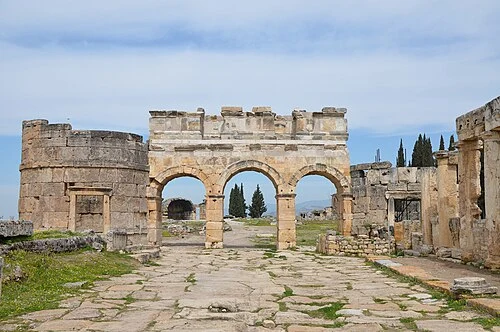
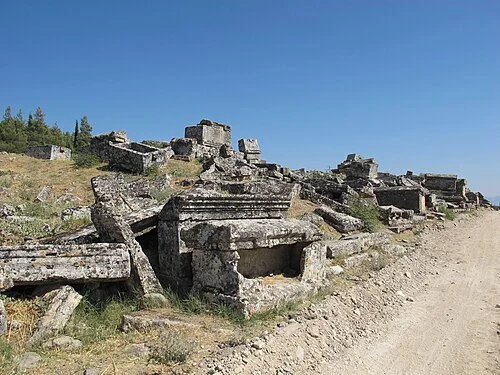
Founded at the end of the 2nd century BC by the Attalid kings of Pergamon, Hierapolis began as a thermal sanctuary city. The rulers of Pergamon recognized both the spiritual prestige and economic promise of the hot springs, which were already associated with older Anatolian cults. Pilgrims traveled long distances seeking cures for chronic illnesses, relief from pain, and purification of the body and spirit. When Pergamon passed into Roman control in 133 BC, Hierapolis flourished further, becoming one of the most important spa cities in Asia Minor. Grand bath complexes, colonnaded streets, temples, fountains, and a vast necropolis rose amid the steam and mineral deposits. The city became a place where one could bathe, pray, socialize, and seek medical treatment all within the same sacred landscape.
A Theatre Born from Destruction and Imperial Ambition
Like many cities of Asia Minor, Hierapolis lived under the constant threat of earthquakes. In 60 AD, a devastating tremor reduced much of the city to ruins. Yet Roman resilience turned disaster into opportunity. Rebuilding efforts in the 2nd century AD, especially under Emperor Hadrian and later Septimius Severus, reshaped Hierapolis into a city of monumental architecture. The theatre we see today belongs largely to this ambitious reconstruction phase.
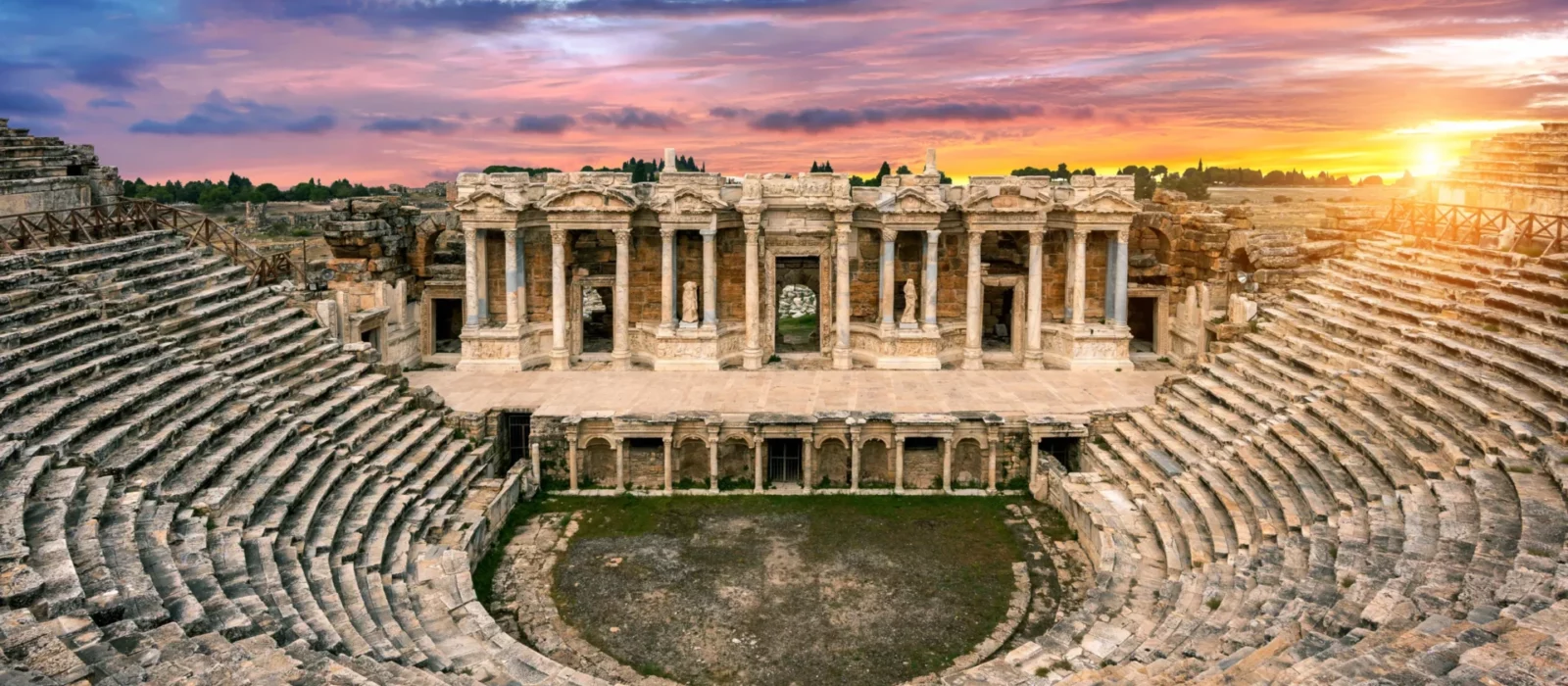
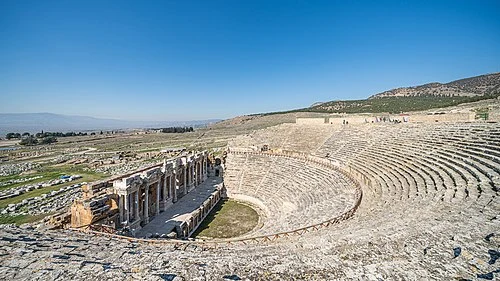
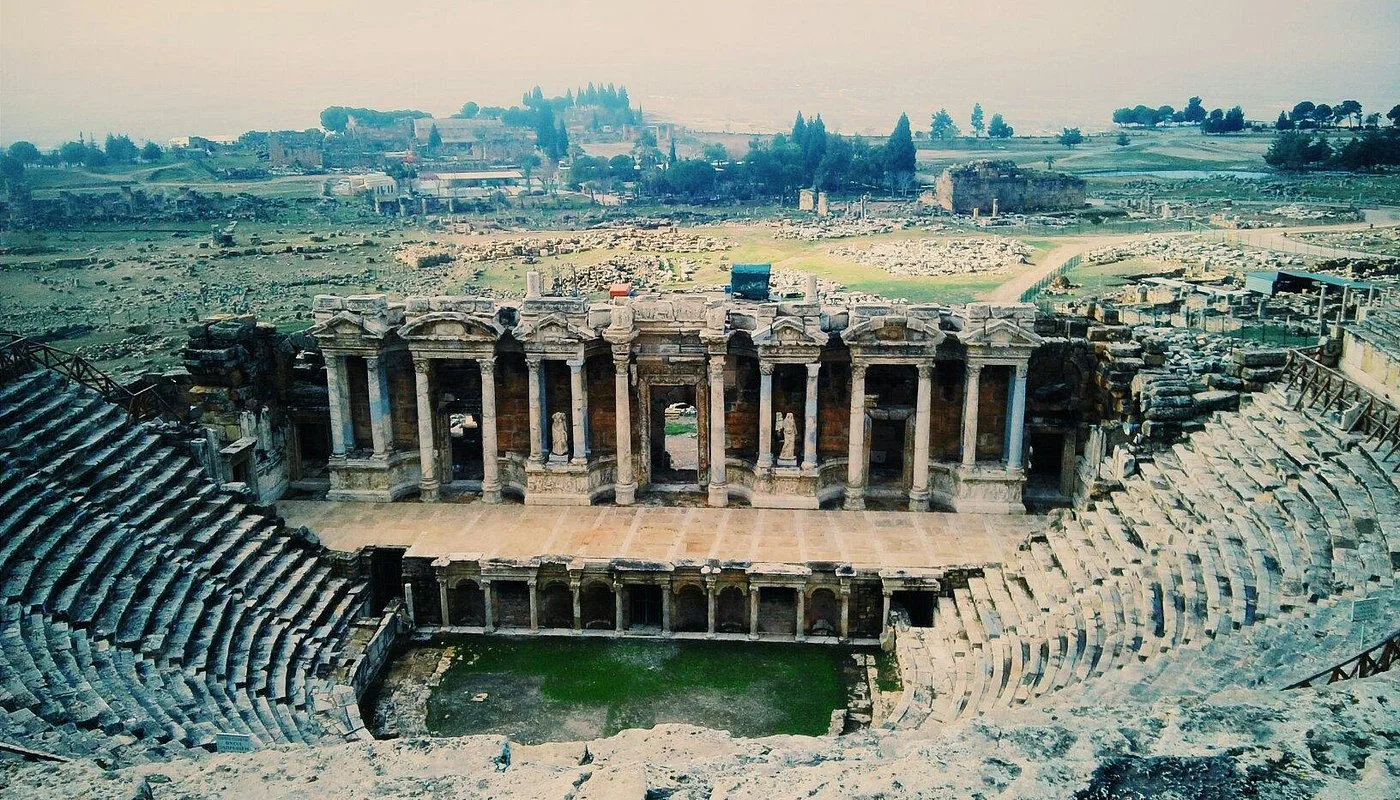
Carved into the hillside in the classic Roman style, the theatre took advantage of the natural slope for structural support and superb acoustics. Its cavea, or seating area, rose in approximately fifty rows divided by stairways into wedge-shaped sections. Spectators entered through vaulted passageways and took their places according to social rank, with the most prestigious seats closest to the orchestra. From these marble benches, thousands could watch performances framed by a magnificent stage building while, beyond the structure, the valley and white terraces shimmered in the Anatolian light.
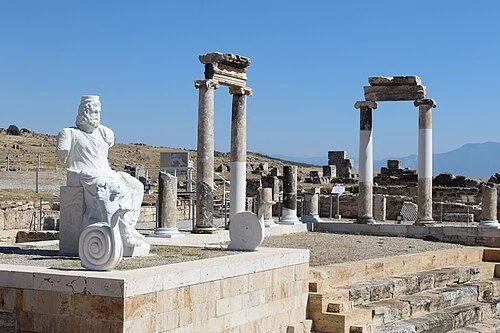
The stage façade, the scaenae frons, was a masterpiece of Roman decorative architecture. Rising in multiple tiers, it was adorned with columns, niches, statues, and elaborate relief panels. These reliefs are among the theatre’s most important artistic treasures. They depict mythological scenes, ritual processions, and sacrificial ceremonies, visually linking theatrical performance to religious observance. One remarkable frieze portrays a ritual procession and offerings to Artemis of Ephesus, a powerful regional deity whose cult extended across western Anatolia. Such imagery reminds us that theatre in the ancient world was not merely entertainment; it was deeply embedded in civic identity, imperial ideology, and sacred tradition.
Performance, Ritual, and the Presence of the Divine
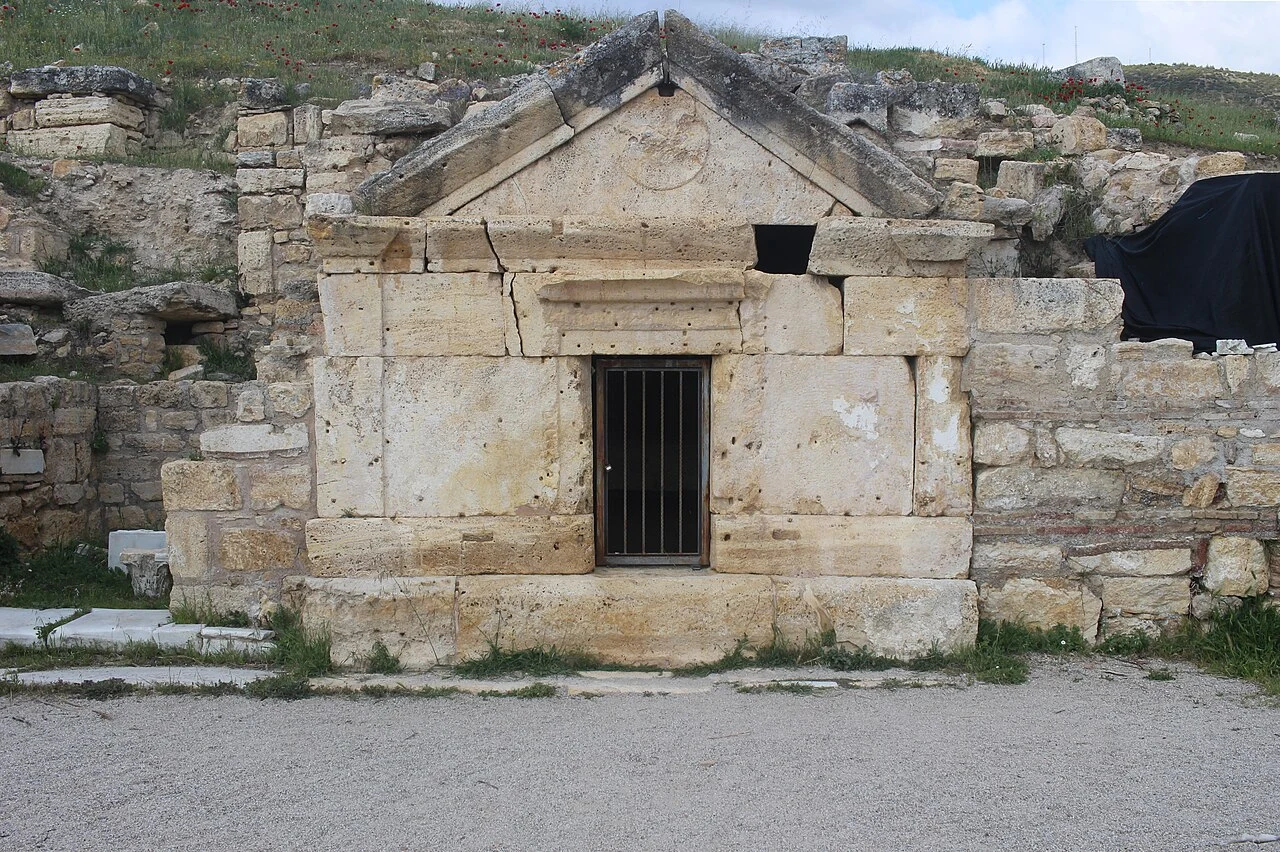
To understand the theatre of Hierapolis, one must imagine it not as an isolated monument but as part of a living sacred landscape. Nearby stood the Temple of Apollo, built above a geological fault that released intoxicating and sometimes deadly vapors. Ancient priests interpreted these fumes as evidence of a gateway to the underworld, and rituals performed there connected the city to chthonic, or earth bound, deities. Visitors moved through a city where steaming pools, sacred caves, temples, and theatres existed side by side, each reinforcing the other’s meaning.
Performances in the theatre ranged from tragedies and comedies to musical recitals and poetic competitions. Festivals likely filled the calendar, blending civic pride with religious devotion. The theatre also hosted ceremonies honoring emperors, reinforcing loyalty to Rome. Like many theatres in the eastern provinces, Hierapolis’s venue was occasionally adapted for spectacles beyond traditional drama. Evidence suggests that gladiatorial contests and animal hunts were staged here, and later modifications to the orchestra may have allowed for water displays, reflecting the evolving tastes of audiences during the later Roman Empire.
Above all, the theatre’s setting made every event extraordinary. As actors performed beneath sculpted gods and heroes, spectators could glance outward and see the brilliant white formations of Pamukkale, constantly reshaped by flowing water. Nature was not a backdrop; it was an active participant in the experience, reinforcing the sense that the city existed in a place touched by divine forces.
From Pagan Sanctuary to Christian Pilgrimage
Hierapolis did not fade with the decline of classical religion. Instead, it adapted to the spiritual transformation of the Roman world. According to early Christian tradition, the Apostle Philip was martyred here in the 1st century AD. By the 4th century, after Emperor Constantine legalized Christianity and founded Constantinople, Hierapolis had become a bishopric. Churches, a cathedral, and a baptistery appeared among the older monuments, reshaping the city’s religious identity.
The most striking Christian structure was the 5th-century Martyrium of St. Philip, built outside the city walls. This octagonal pilgrimage church, surrounded by chapels and ceremonial spaces, drew believers from across the region. Pilgrims who once sought healing through thermal waters now came seeking spiritual intercession. Yet the city’s older monuments, including the theatre, remained part of the urban landscape, reminders of a classical past that continued to shape daily life.
Over the centuries, earthquakes, invasions, and economic decline led to gradual abandonment. By the medieval period, Hierapolis was largely deserted, its buildings collapsing and slowly becoming buried. Still, the site’s extraordinary appearance ensured it was never entirely forgotten. Travelers described the white terraces and scattered ruins long before systematic archaeology began.
Rediscovery, Restoration, and Enduring Legacy
Modern excavations began in the late 19th century, but it was the long-term Italian archaeological missions, beginning in 1957, that truly revealed the theatre’s splendour. Thousands of fallen architectural fragments were catalogued and reassembled using anastylosis, the careful reconstruction of monuments from original materials. The stage façade, seating areas, and decorative reliefs gradually regained their presence, allowing modern visitors to appreciate the theatre’s former magnificence.
Today, Hierapolis-Pamukkale is recognized as a UNESCO World Heritage Site for the unique fusion of natural beauty and human achievement. Strict conservation measures protect the fragile travertine terraces and ancient structures, balancing tourism with preservation. The theatre occasionally hosts cultural performances once more, echoing its original function while reminding us how fragile and enduring heritage can be at the same time.
For history lovers, the Roman Theatre of Hierapolis is more than an architectural relic. It is a place where empires rebuilt after disaster, where drama unfolded in the presence of sacred springs, and where faith transformed but never erased the past. Sitting on its marble seats, one can imagine the murmur of ancient crowds, the echo of music, and the constant whisper of mineral water shaping the luminous landscape below, a dialogue between nature and civilization that has lasted for over two thousand years.
Hierapolis – Photo Gallery
Extremely motivated to constantly develop my skills and grow professionally. I try to build my knowledge, flexibility, and interpersonal skills through several projects and within different teams.
I am continually browsing online for posts that can assist me. Thanks!