




Café Maure Achiri: A Timeless Escape in the Heart of Hammamet
Before the city wakes, before the narrow streets of the Medina fill with footsteps and voices, a quiet ritual unfolds behind ancient stone walls. The scent of fresh mint drifts through the air, small glasses gently clink against metal trays, and the first rays of sunlight slowly illuminate a place where time seems to move differently. At the edge of the Hammamet Medina, where the town’s historic walls meet the rhythm of everyday life, stands Café Maure Achiri. More than a café, it is a living witness to generations of stories, conversations, and traditions. For over a century, this humble yet iconic place has offered something increasingly rare in the modern world: a space where time slows down, and life unfolds at its most authentic pace. Known historically as Café Azaïs, this traditional café has long served as a meeting point for locals, travellers, thinkers, and dreamers. Here, history is not preserved behind glass. It is lived daily through gestures, routines, and shared moments.
Table Of Content
- Café Maure Achiri: A Timeless Escape in the Heart of Hammamet
- A Landmark Captured in Time
- The Morning Ritual: Where the City Begins
- More Than Coffee: A Place of Connection
- A Living Expression of Café Maure Culture
- What to Order: A Taste of Tradition
- Watching Life Unfold
- Why Café Achiri Matters Today
- Café Maure Achiri Hammamet Photo Gallery
A Landmark Captured in Time
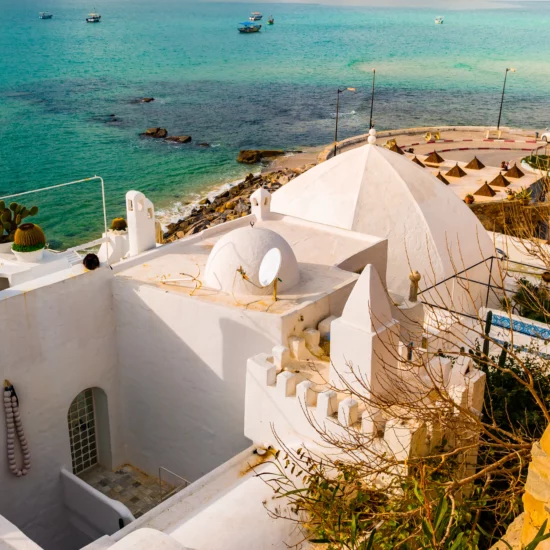
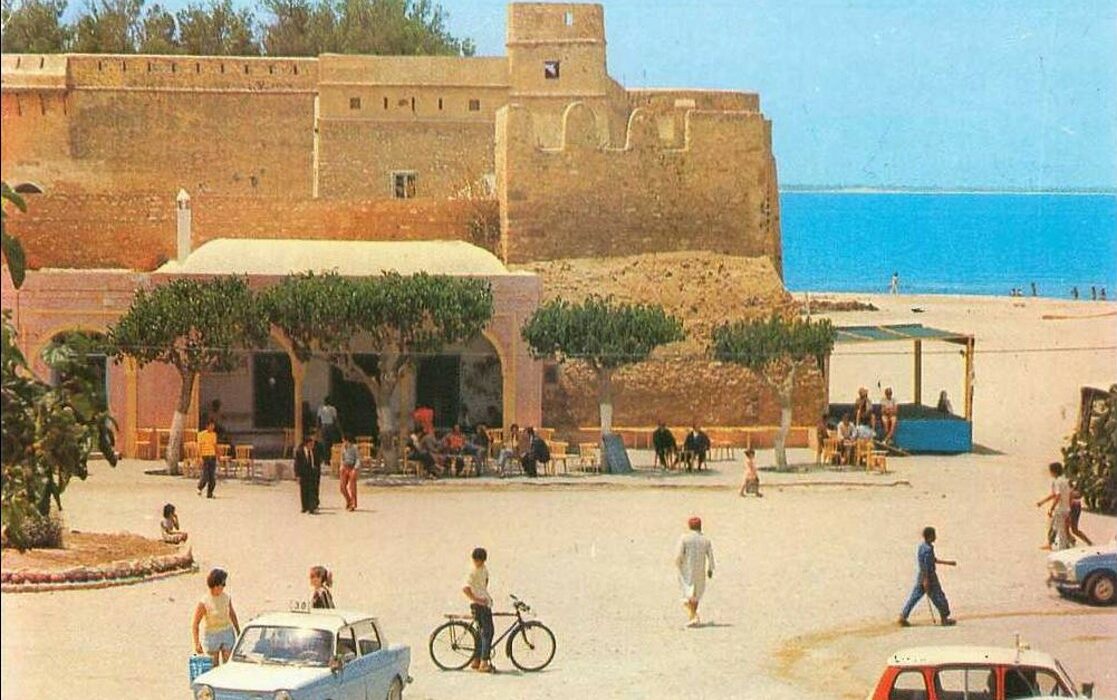
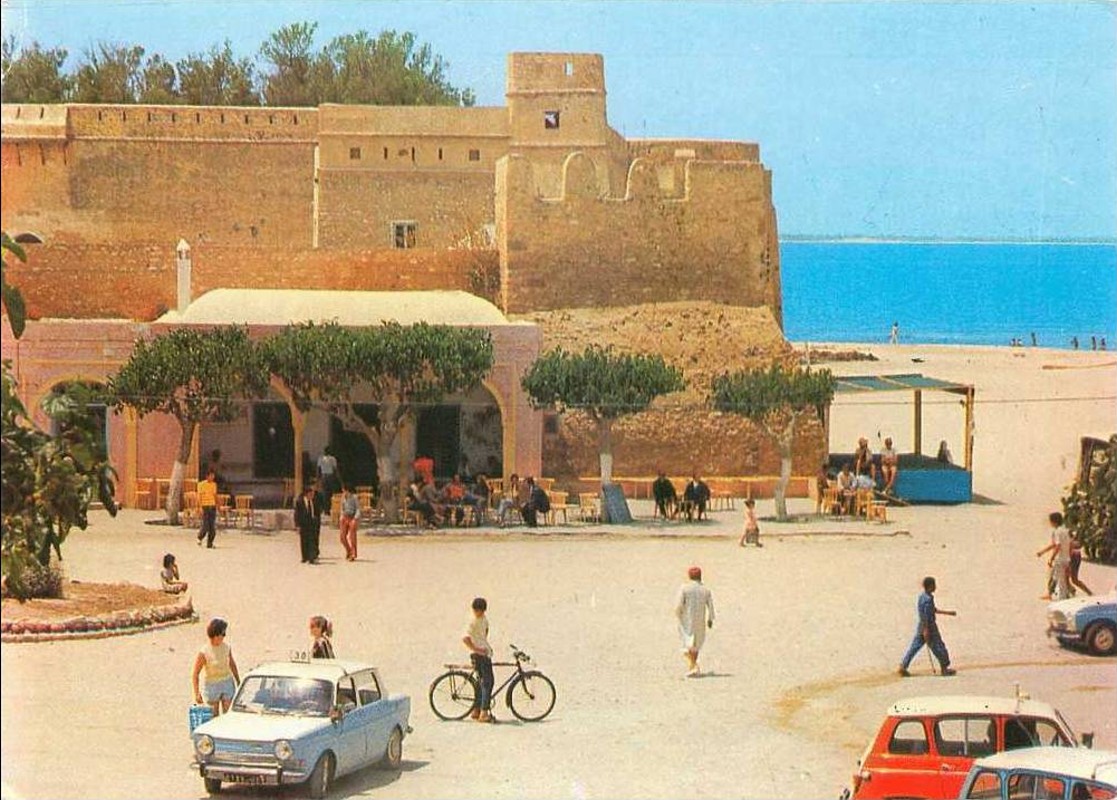
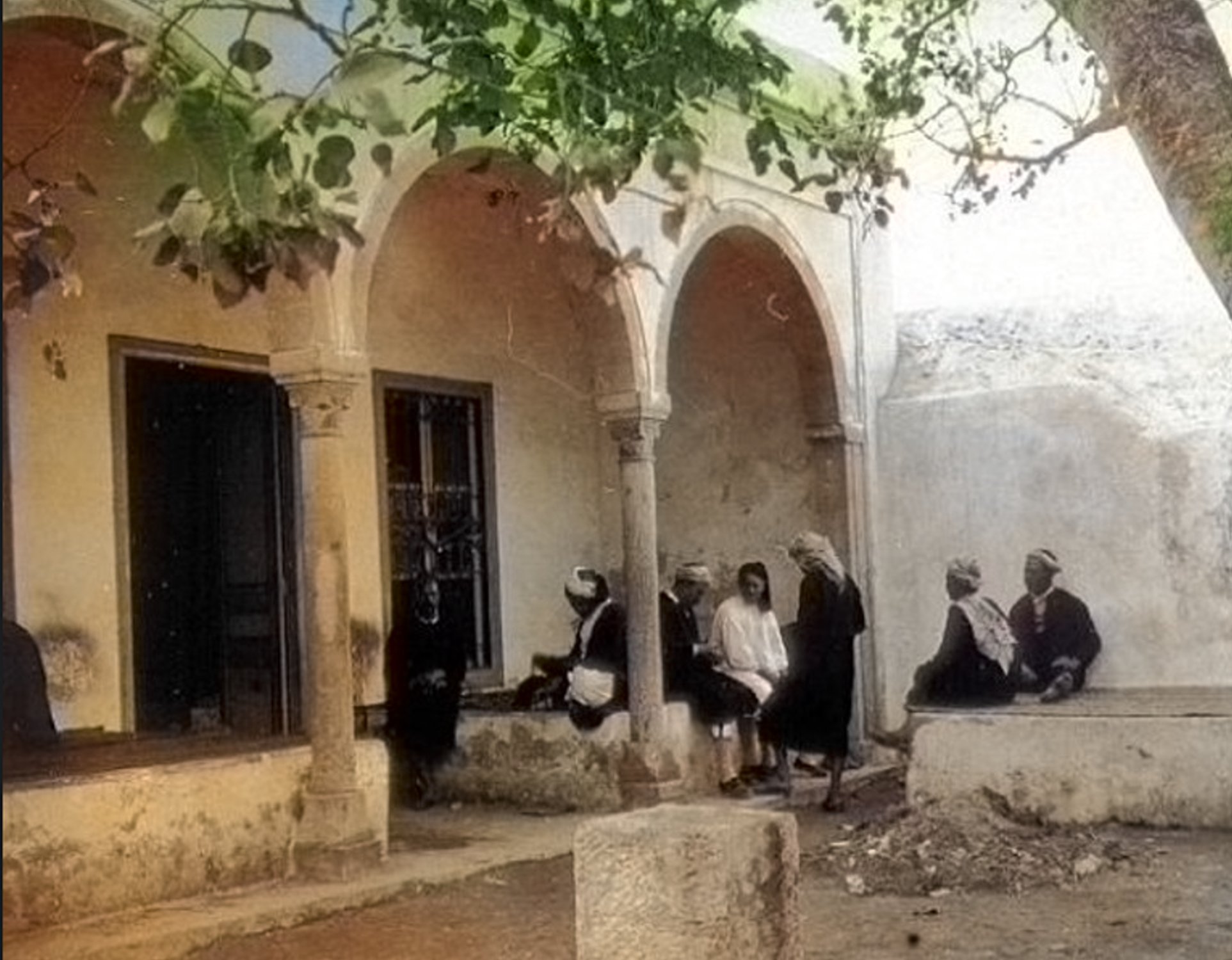
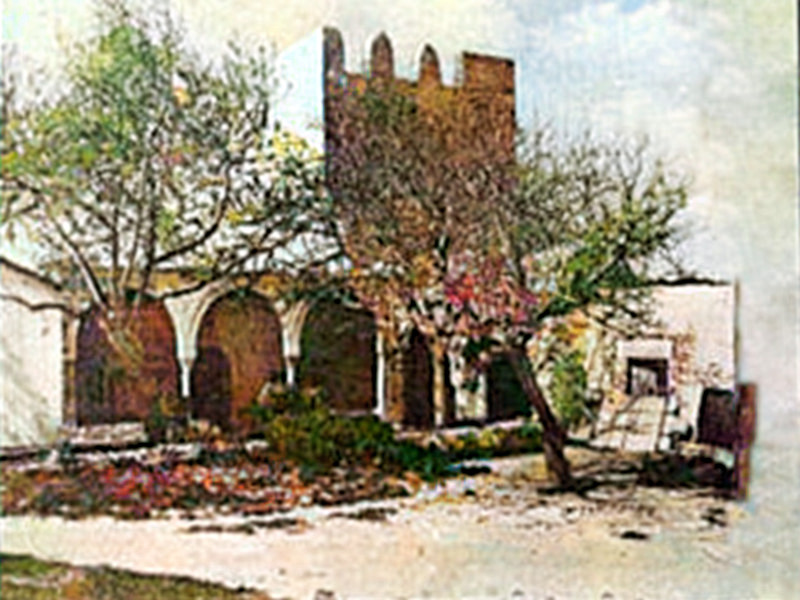
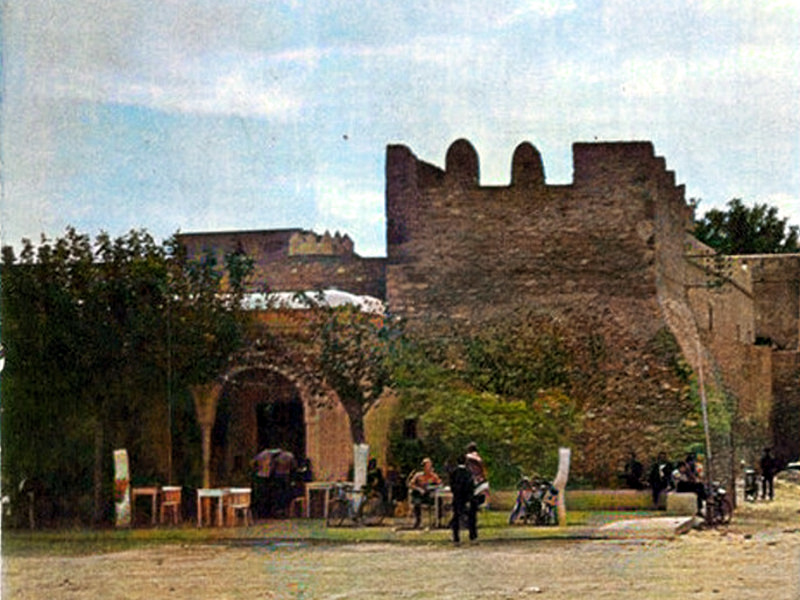
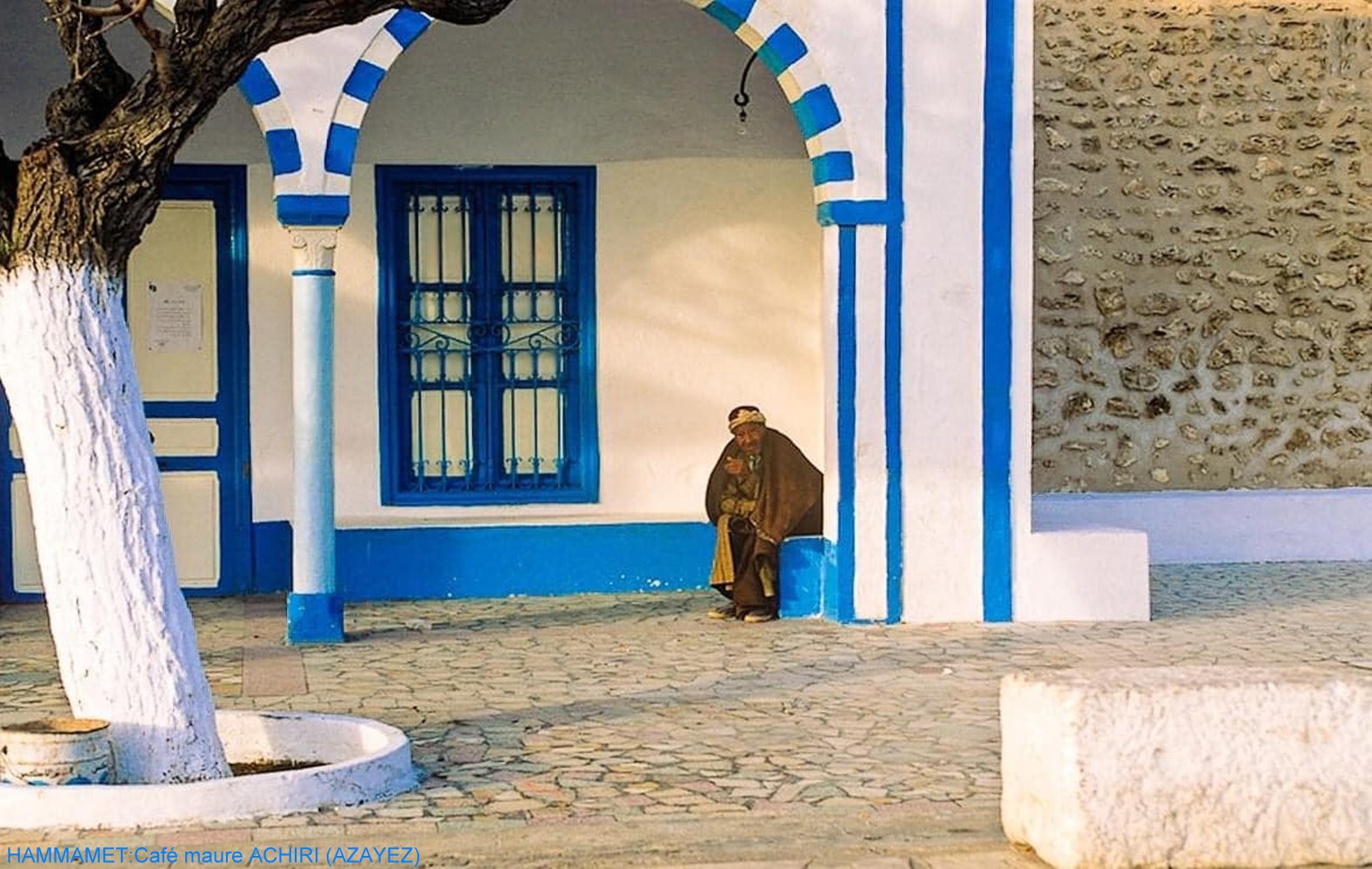
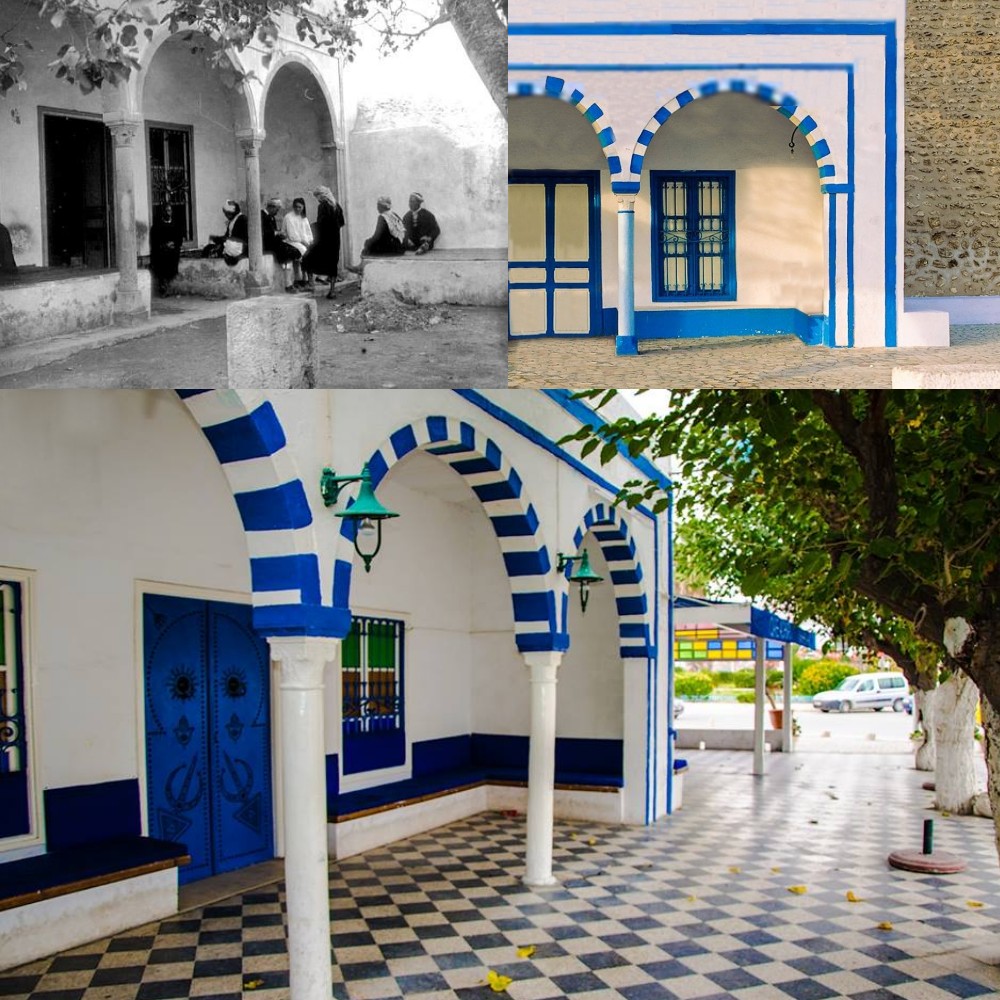
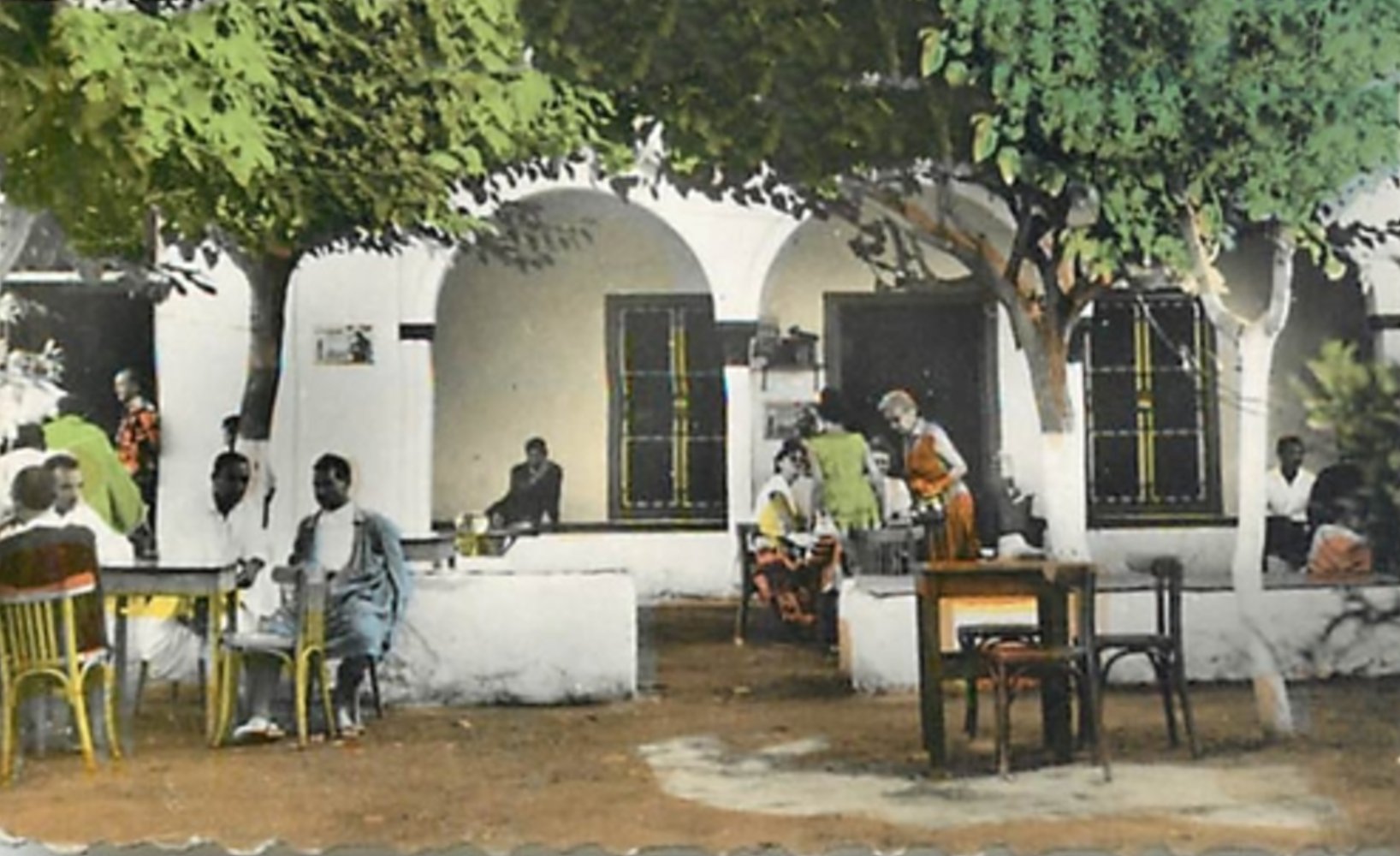
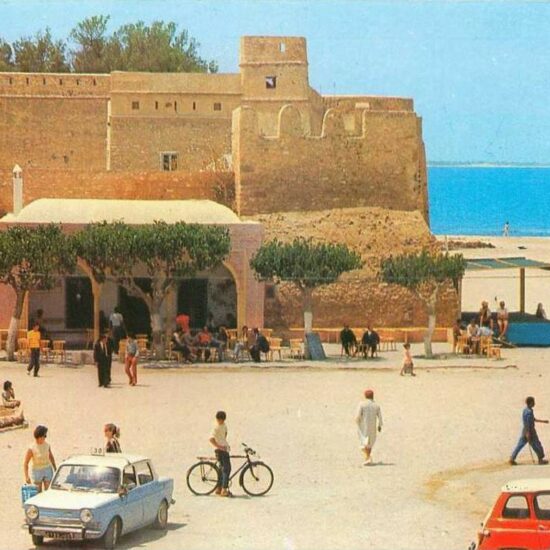
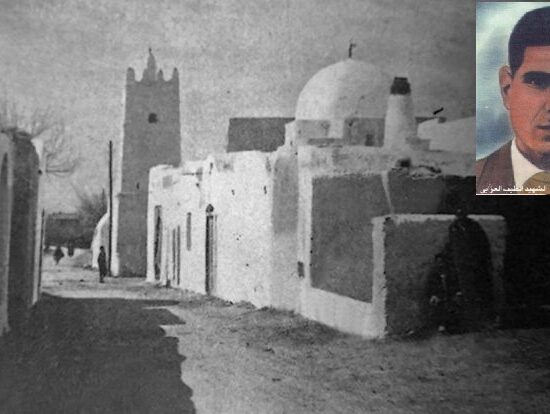
Café Achiri is not simply part of Hammamet’s heritage. It is one of its enduring symbols. Vintage postcards from the early twentieth century already feature the café’s distinctive architecture, revealing how deeply it is woven into the city’s identity. The building, owned by the municipality, stands as a protected element of local heritage and collective memory. Its whitewashed walls, shaded terrace, and strategic position near Bab Slougui have made it a natural gathering place for generations. Over the decades, while the surrounding city evolved and modernised, Café Achiri retained its essential character. Its continuity reflects a broader truth about Hammamet itself: a city that grows while preserving its soul. For many residents, the café represents a familiar constant, a place where memories accumulate quietly over time.
The Morning Ritual: Where the City Begins
The story of Café Achiri begins at dawn. Long before tourists arrive or shops open their doors, the café fills with life. The first visitors are often fishermen returning from the sea, their hands still marked by the night’s work. They stop for a strong coffee, exchange news from the harbour, and rest before returning home. Soon after, worshippers arrive following morning prayers, seeking warmth, conversation, and a moment of reflection. Workers gather before heading to construction sites, farms, or workshops. Students meet friends while waiting for the bus to Nabeul, their voices blending with the sounds of the awakening city. This daily rhythm reveals the café’s true role. It is not merely a business but a shared social space where the pulse of the community can be felt.
More Than Coffee: A Place of Connection
Long before digital communication reshaped social life, Café Achiri functioned as a vital centre of information and exchange. Locals often described it as a hub of the téléphone arabe, a place where news travelled quickly, where stories were shared, and where community bonds were strengthened. In earlier decades, when televisions were rare, men gathered around a single radio on Sunday afternoons, listening intensely to football match commentaries. Each goal, each moment of suspense, was experienced collectively. That spirit of connection remains visible today. Visitors can still observe animated discussions, quiet contemplation, and traditional card games such as Scopa, Rami, and Belote. During the evenings of Ramadan, the atmosphere becomes even more vibrant, as families and friends gather late into the night. The café continues to serve as a space where relationships are built, maintained, and celebrated.
A Living Expression of Café Maure Culture
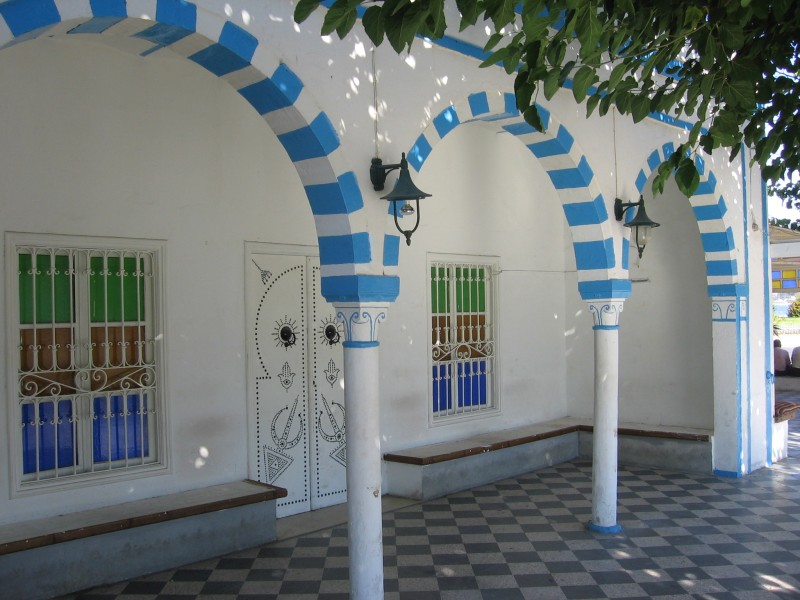
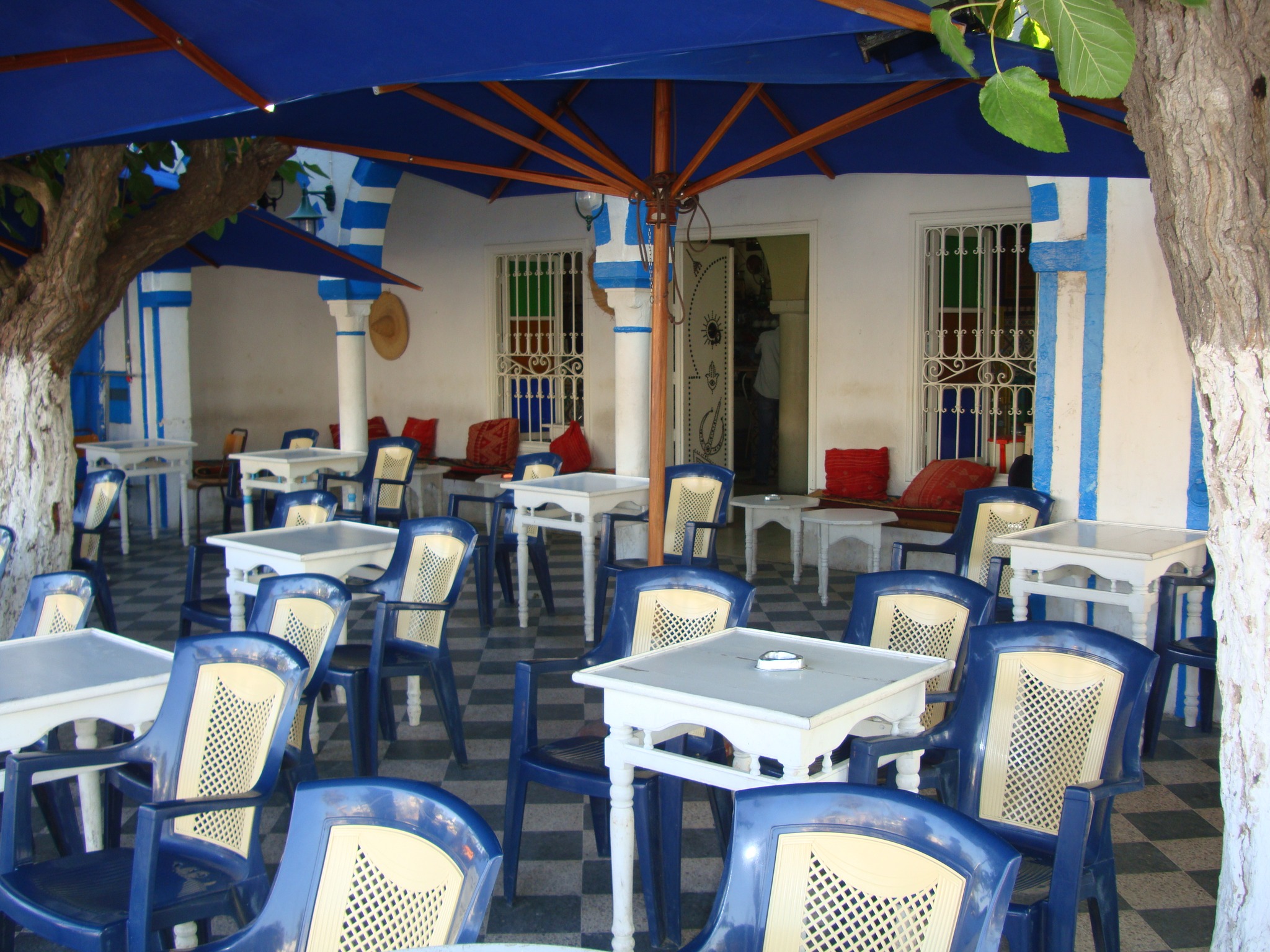
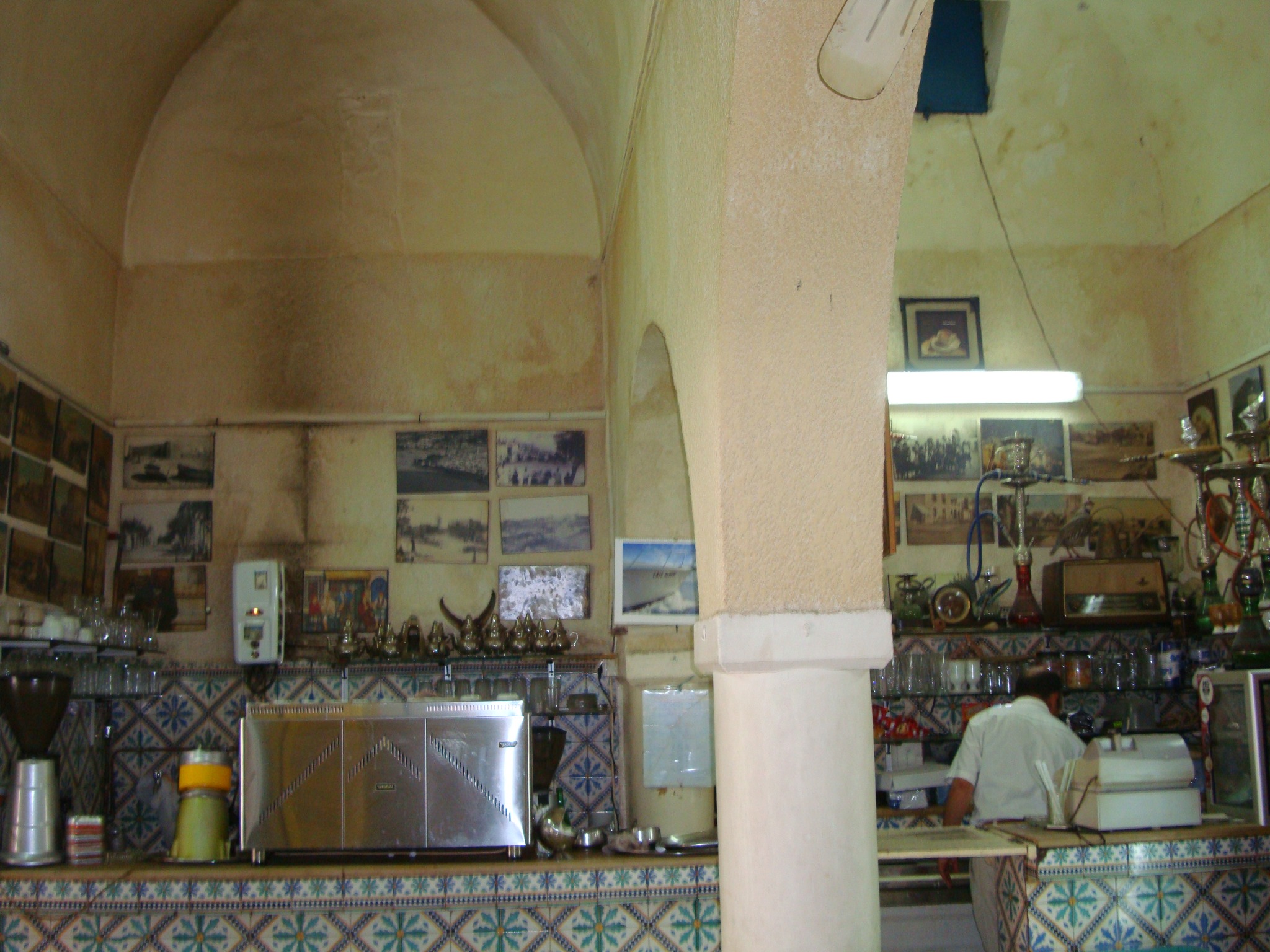
Café Achiri represents a broader tradition deeply rooted in Tunisian culture: the café maure. These traditional cafés historically functioned as spaces of relaxation, conversation, and cultural exchange. Their architecture, often characterised by open terraces, simple seating, and decorative tilework, reflects a Mediterranean and Arab aesthetic centred on hospitality and community. Unlike modern cafés focused on speed and efficiency, the café maure encourages stillness. Time is not measured in minutes but in conversations, shared silences, and the slow enjoyment of tea or coffee. This philosophy continues to shape the experience at Café Achiri today.
What to Order: A Taste of Tradition
Visitors to Café Achiri will not find elaborate menus or fashionable coffee trends. The café remains faithful to its origins, offering simple preparations perfected over generations.
- Thé à la Menthe (Mint Tea)
Served hot and generously sweetened, this tea is infused with fresh mint leaves and poured with care. More than a drink, it represents hospitality and welcome. - Café Turc (Turkish Coffee)
Rich, strong, and aromatic, this traditional coffee is prepared slowly and served in small cups. Its preparation reflects a ritual of patience and precision. One of the café’s most remarkable qualities is its accessibility. It remains among the most affordable gathering places in the city, welcoming people from all backgrounds.
Watching Life Unfold
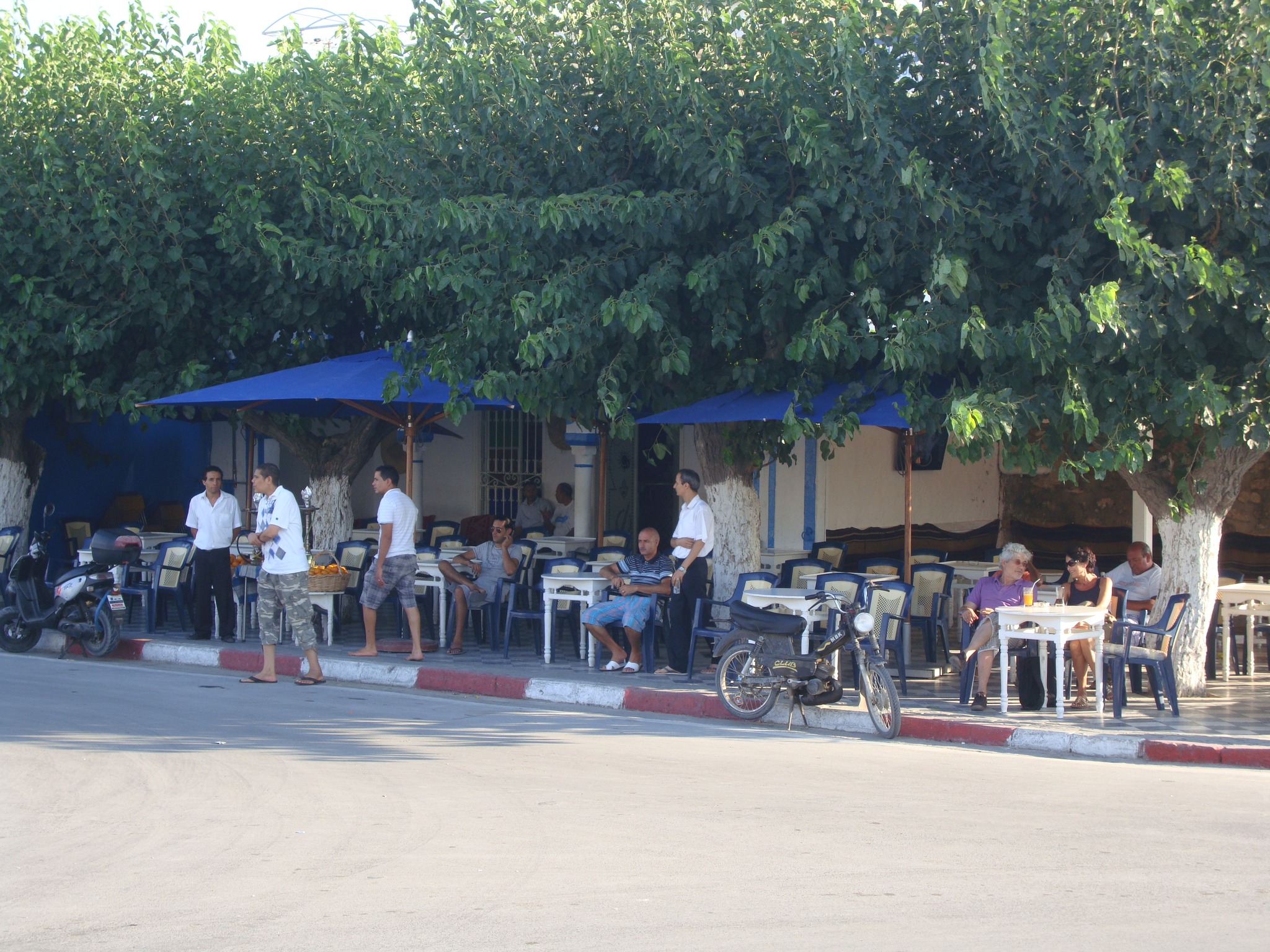
Perhaps the greatest pleasure of Café Achiri lies in its terrace. From this vantage point, visitors can observe the continuous flow of life passing through the Medina. Merchants, families, visitors, and longtime residents cross paths in a quiet choreography that reflects the rhythm of the city. Sitting here, one senses the continuity between past and present. The setting feels largely unchanged despite the passage of time, offering a rare glimpse into the enduring character of traditional urban life in Tunisia.
Why Café Achiri Matters Today
As Hammamet continues to grow as an international destination, places like Café Achiri preserve the essence of local identity. They remind visitors that a city’s true spirit is found not only in monuments or landscapes but in everyday spaces where people gather, share, and connect. Café Maure Achiri is therefore more than a historical landmark. It is a living space of memory, culture, and human connection. It represents the enduring value of simplicity, community, and tradition in a rapidly changing world. To visit Café Achiri is to experience Hammamet not as a destination, but as a living story. Have you ever visited a traditional café maure in Tunisia? Share your favourite memory or your favourite drink.
Café Maure Achiri Hammamet Photo Gallery

No Comment! Be the first one.