







Musée d’Orsay: From Industrial Ambition to a Sanctuary of Nineteenth-Century Art
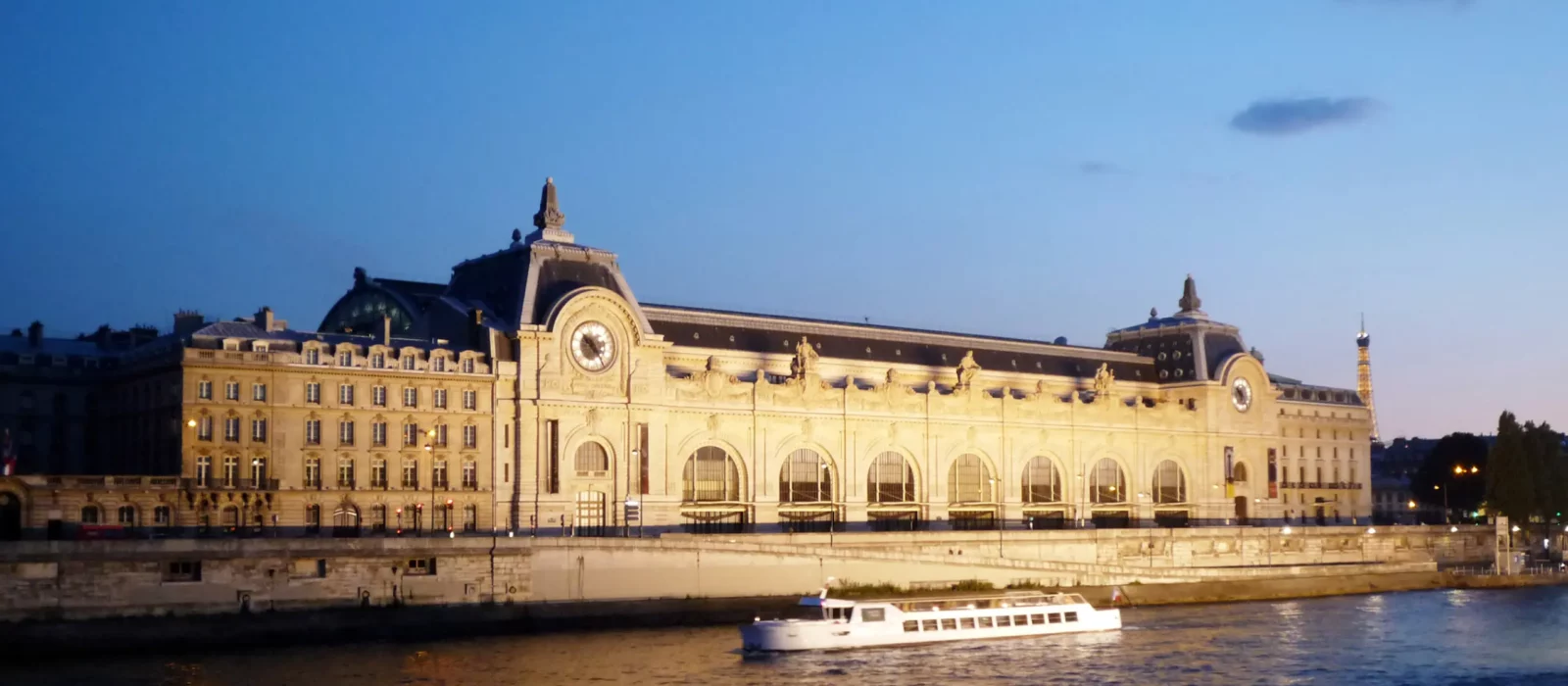
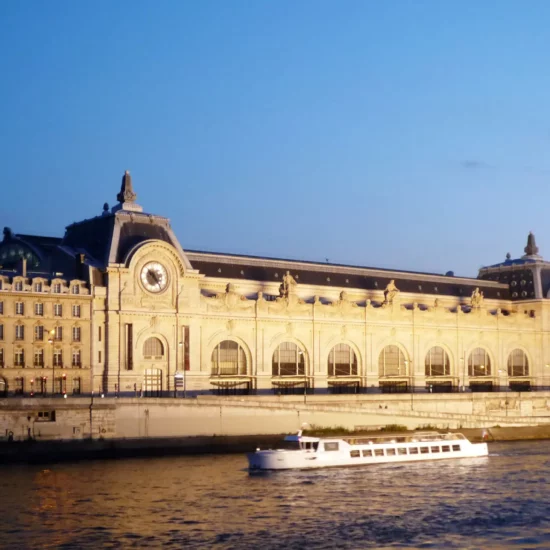
Standing along the banks of the Seine, directly opposite the Tuileries Gardens, the Musée d’Orsay is one of Paris’s most powerful symbols of transformation. More than a museum, it is a historical witness to modern France. Its walls have seen the optimism of the Belle Époque, the devastation of war, the decline of industrial infrastructure, and finally a cultural rebirth that reshaped how the world understands nineteenth-century art.
Today, millions of visitors walk through its halls each year, often unaware that they are standing on what was once one of Europe’s most advanced railway stations. The story of the Musée d’Orsay is inseparable from the story of Paris itself, a city constantly reinventing its past while preserving its soul.
The Birth of the Gare d’Orsay and the Spirit of 1900
The origins of the Musée d’Orsay date back to the final years of the nineteenth century, a time when France was eager to demonstrate its industrial strength and cultural leadership. In 1898, construction began on a new railway station that would serve as the Paris terminus for the Orléans Railway Company. The project was commissioned as part of preparations for the Exposition Universelle of 1900, an international event designed to celebrate progress, science, and modern civilization.
The architect chosen for this ambitious project was Victor Laloux, a prominent figure trained at the École des Beaux-Arts. Laloux faced a unique challenge. The station had to incorporate cutting-edge industrial technology while blending harmoniously with the historic architecture of central Paris. His solution was revolutionary. Behind an elegant stone façade inspired by classical architecture, he concealed a vast steel and glass structure that housed the railway platforms.

The Gare d’Orsay officially opened on 28 May 1900. At the time, it was considered a technological marvel. It was one of the first stations in the world designed exclusively for electric trains, eliminating smoke and allowing it to be built close to the historic heart of the city. Travelers arriving from southwestern France stepped into a space that embodied confidence in the future, bathed in light and framed by modern engineering.
Decline, War, and Uncertain Fate
The rapid pace of technological change soon caught up with the station. By the late 1930s, trains had become longer and heavier, and the Gare d’Orsay was no longer suitable for long-distance travel. In 1939, the station ceased to function as a mainline terminal. What followed was a long period of uncertainty.
During World War II, the building was used for various purposes. It served as a postal center for prisoners of war and later as a temporary shelter. After the war, parts of the station were converted into offices, and its grand hall was occasionally used for cultural events and film sets. Despite these uses, the building increasingly fell into neglect.
By the 1960s, the Gare d’Orsay was considered outdated and inefficient. Several proposals called for its demolition, a fate that befell many historic buildings during that period of rapid urban modernization. The station survived largely due to growing awareness of architectural heritage and a renewed appreciation for nineteenth-century structures.
A Vision Takes Shape: Creating a Museum
The turning point came in 1977, when the French government officially decided to transform the abandoned station into a museum. The goal was ambitious. France lacked a major institution dedicated specifically to art produced between 1848 and 1914, a period that witnessed dramatic political upheaval, industrialization, and artistic revolution.
This era included the fall of monarchies, the rise of the Republic, the transformation of Paris under Baron Haussmann, and the emergence of modern life. Artists responded by challenging academic traditions and redefining the purpose of art itself. The former Gare d’Orsay offered an ideal space to tell this story.
After extensive renovation and careful preservation of the original structure, the Musée d’Orsay opened to the public on 1 December 1986. The project was completed under President François Mitterrand, whose administration supported major cultural initiatives across Paris. The opening marked a new chapter in the life of the building and in the presentation of nineteenth-century art.
Architecture as Historical Memory
Walking through the Musée d’Orsay, visitors experience architecture as history. The vast central nave, once filled with the sound of arriving trains, now houses monumental sculptures from the nineteenth century. Natural light pours through the glass roof, highlighting marble, bronze, and stone.
The museum preserves many original elements from the station, including clocks, iron frameworks, and decorative details. These features remind visitors that art does not exist in isolation. It is shaped by the spaces, technologies, and societies that surround it.
Romanticism and the Aftermath of Revolution
The museum’s chronological journey begins in the mid nineteenth century, following the Revolution of 1848. This period of political instability inspired artists to explore emotion, drama, and historical memory. Romantic painters such as Eugène Delacroix emphasized intense color and expressive movement, often drawing on themes of struggle and freedom.
At the same time, Realist artists like Gustave Courbet rejected idealized subjects altogether. Courbet believed that art should represent the world as it was lived. His paintings of workers, rural landscapes, and everyday scenes challenged the expectations of the Paris Salon and shocked contemporary audiences.
Impressionism and the Birth of Modern Vision
The heart of the Musée d’Orsay lies in its unparalleled collection of Impressionist art. Emerging in the 1870s, Impressionism reflected a rapidly changing Paris. New boulevards, cafés, railway stations, and leisure activities became subjects worthy of art.
Artists such as Claude Monet, Pierre-Auguste Renoir, and Edgar Degas abandoned studio conventions in favor of painting directly from life. They focused on fleeting moments, atmospheric light, and the rhythms of modern existence. Their work was initially dismissed by critics, yet it would come to define one of the most influential movements in art history.
Post-Impressionism and the Inner World
By the late nineteenth century, artists began pushing beyond Impressionism. Post-Impressionists sought deeper emotional and symbolic meaning. Among them was Vincent van Gogh, whose work occupies a central place at the Musée d’Orsay.

Painted in 1888, Starry Night Over the Rhône reflects Van Gogh’s fascination with color and emotion. The painting captures the night sky shimmering above the river, transforming an ordinary scene into an intense personal vision. It represents a turning point toward modern expression.
The Clock and the Passage of Time
One of the most memorable features of the museum is the great clock, installed in 1900. Once used to regulate train schedules, it now frames a view of Paris that feels almost timeless. From this vantage point, visitors see the Seine flowing past the city, unchanged in its course yet surrounded by centuries of history.

Conclusion: A Living Bridge Between Past and Present
The Musée d’Orsay is not simply a museum of art. It is a living bridge between eras. From its construction in 1898 to its rebirth in 1986, the building reflects France’s evolving relationship with history, progress, and memory. For history lovers, every gallery offers more than beauty. It offers insight into how societies change and how art records those changes.
Leaving the museum, one understands that the story of the Musée d’Orsay is far from over. Like the river flowing beside it, history continues, carrying with it the voices, visions, and emotions of those who came before.



No Comment! Be the first one.